
At Wednesday night’s Speak Up, we spent time with the question, “Why does everything fall on me?” We’d moved from our usual Thursday to Wednesday, so it was a smaller group than normal. It was still a good night. Sometimes a few of us sitting around, having a decent chinwag and talking about what’s going on is exactly what the group needs to be. You don’t always need a big group or a big revelation. Sometimes it’s just good to have a place where you can say what’s going on without somebody jumping in straight away to tell you what to do.
One thought that stayed with me was that sometimes, without meaning to, we help keep the pattern going. That doesn’t mean everything is our fault. It does mean there may be parts of it we have some say in, even if we haven’t noticed them before.
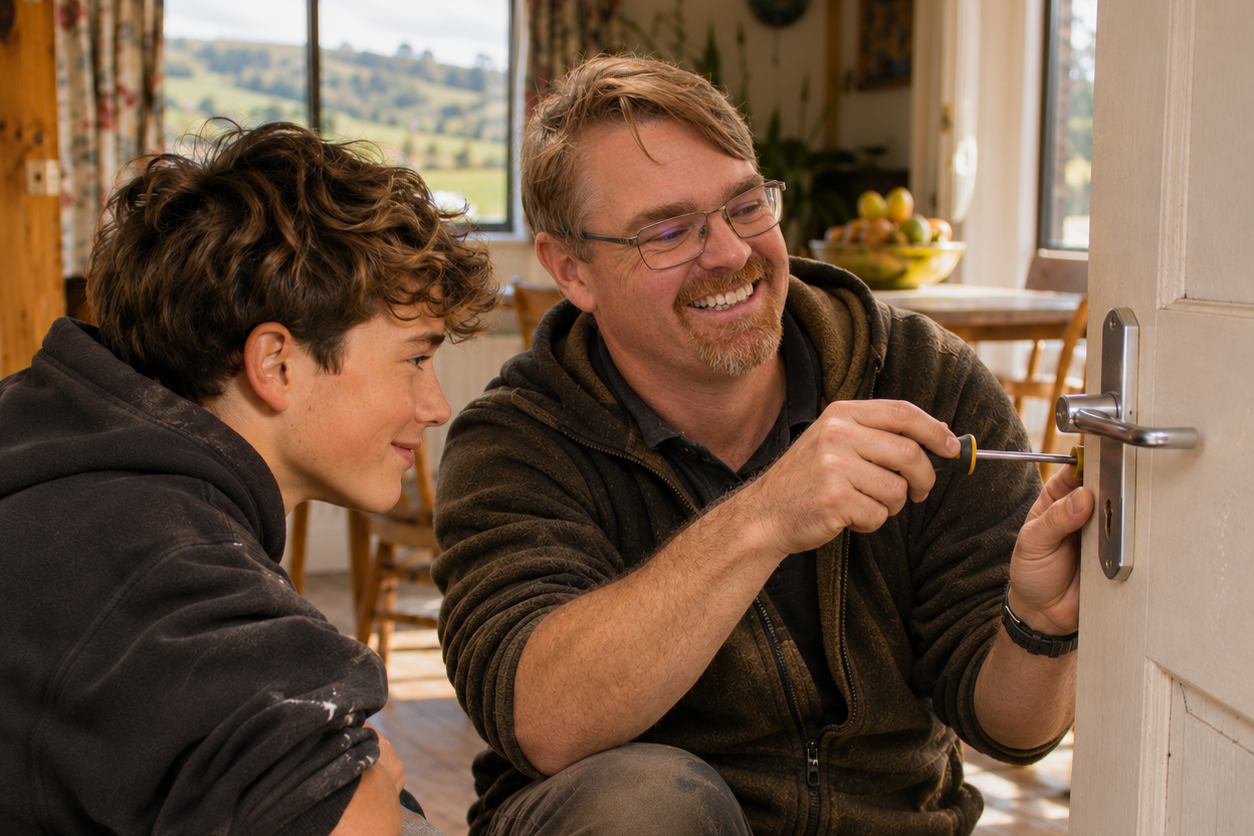
Have we shown anyone else how?
We talked about a simple example: a door needs adjusting. The tools are there, it might only need a quick fix, and you know how to do it. So you get called in and sort it out. It’s easy to think, “Why am I always the one who has to do this?”
A useful question is, have I shown anyone else how? If we always step in because it’s quicker, because we know how, or because we worry someone else won’t do it properly, people learn to leave it to us. Then we can feel frustrated that everything lands on our shoulders. It can become so familiar that nobody even thinks to ask whether somebody else could have a go.
Sometimes taking a bit of time to show someone how—or letting them learn as they go—can change the pattern. It might take longer in the moment, and they may not do it exactly the way we would. That can be hard if we’re used to being the one who gets it right first time. But it could mean you’re not the only person who can do the job next time. It also gives the other person a chance to learn, rather than quietly telling them that this is your job and they should leave it to you.
That question can apply to more than fixing things around the house. How often do we take over at work, in our families or in relationships because doing it ourselves feels easier than explaining, delegating or allowing somebody else to make a few mistakes? And how often do we then resent the very role we’ve kept stepping into?
When staying useful keeps the work coming
We also explored a work situation. Imagine a customer asks for a repair and agrees to the price. Then, once the job is looked at properly, it becomes clear that rebuilding it would cost less and produce a better result. There’s a choice to make: do the repair as agreed, or explain the better option?
That’s not always a simple call. There are real commitments and practical details to consider. But the question can lead somewhere bigger. Sometimes work gives us security. Sometimes being needed feels good. And sometimes there’s a worry that if we solve a problem properly, we might make ourselves unnecessary. If I make this easier, what happens to the work? If I’m no longer the person who fixes it, what will my place be?
I don’t think that’s limited to trades or business. It can happen anywhere we become the person who fixes things for everybody else. We might keep taking on extra jobs, smoothing things over or anticipating what people need before they ask. It can look like generosity, and sometimes it is. But it can also be a way of feeling safe, valued or needed. There’s nothing wrong with wanting to contribute. The question is whether we still have a choice, or whether we feel we have to keep doing it.

The push and pull between us
We also talked about what happens when somebody asks us to do something and the way they ask brings up a reaction. One person might push because they want something done. The other feels that pressure and shuts down, avoids it or gets distracted by something else. Then the first person sees that nothing is happening and pushes harder. The more they push, the more the other person withdraws.
It can go the other way too. We might agree to something we don’t really want to do because saying no feels like it will create more tension. On the surface the job gets done, but underneath there may be frustration or resentment that we never said what we actually wanted.
Either way, we can stop responding to the task itself and start reacting to each other’s reactions. The more one person pushes, the less the other engages; the less they engage, the more pressure the first person feels they need to apply. It’s a familiar loop, and it can be hard to see when we’re right in the middle of it.
That doesn’t mean everything is our fault. It does give us a question we can work with: what part might I be playing in keeping this going? Maybe it’s taking over before anyone has asked us. Maybe it’s not being clear about what we are willing to do. Maybe it’s assuming the other person should know what we need, then feeling let down when they don’t.
Seeing our part can give us more choice. We might show somebody how, say honestly that we don’t want to do something, ask for help, or notice that we’re taking over before anyone has asked us to. None of those things guarantees the other person will respond how we’d like. But it can change the part we bring to the situation, and sometimes that is where a different conversation can begin.
Sometimes it’s just good to have somewhere to talk
Wednesday wasn’t a night of huge revelations. A good part of it was just a few men talking about life, and I think there’s value in that too. Speak Up isn’t about having to turn up with a problem or arriving with something profound to share. Sometimes it’s enough to have somewhere to talk about what’s happening with other men who aren’t there to judge you or immediately fix it.
Our next Speak Up Cambridge night is Thursday 3 December at 7pm at The Healing Barn in Cambridge. There’s no pressure to share. You’re welcome to come along, listen and take whatever feels useful.
