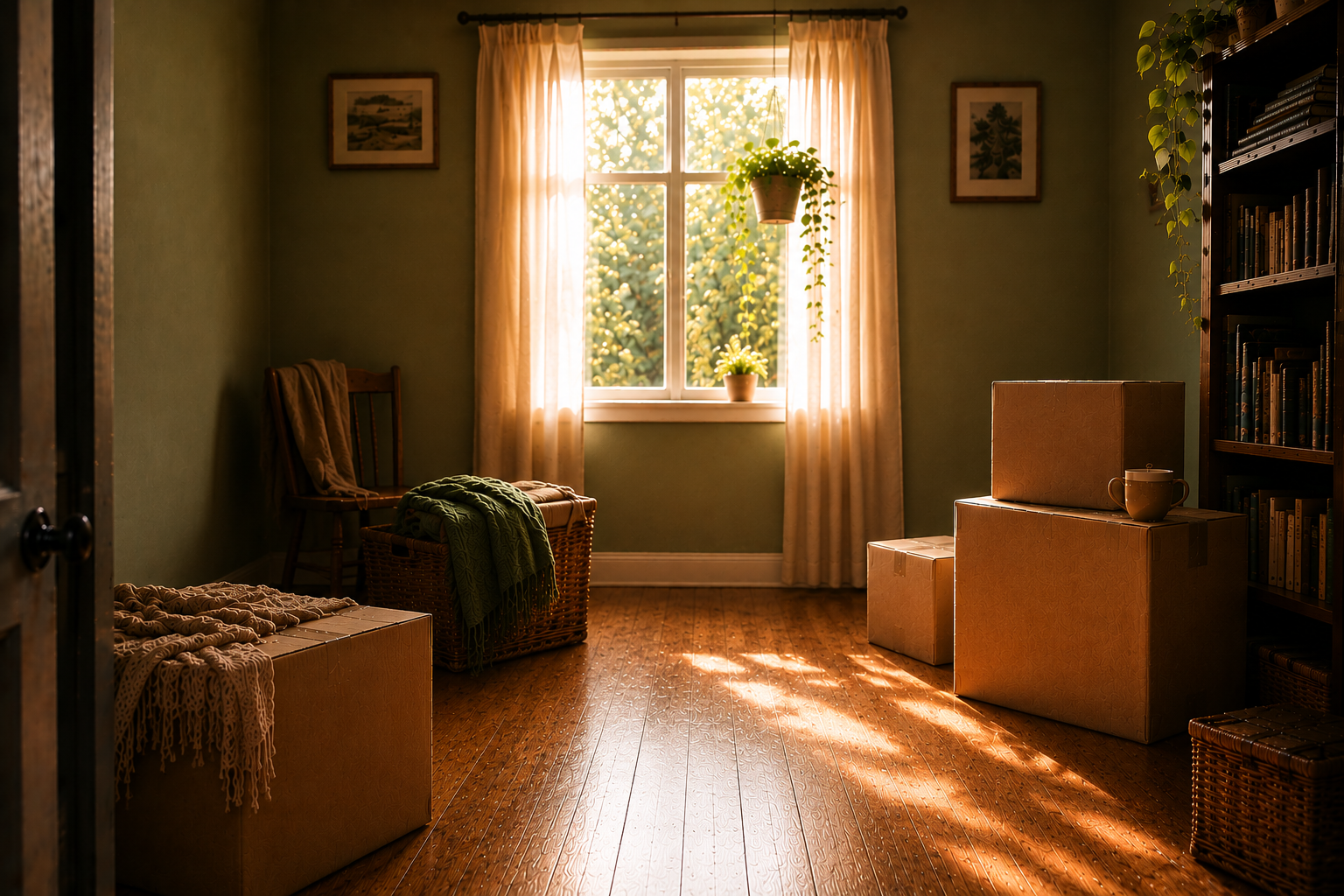
When Your Inner World Starts Running Out of Room
Imagine trying to live your life in a room that's filled with boxes. At first, there are only a few. There's plenty of space to move around them, so they don't interfere with life very much. You can walk from one side of the room to the other without really thinking about where you're putting your feet.
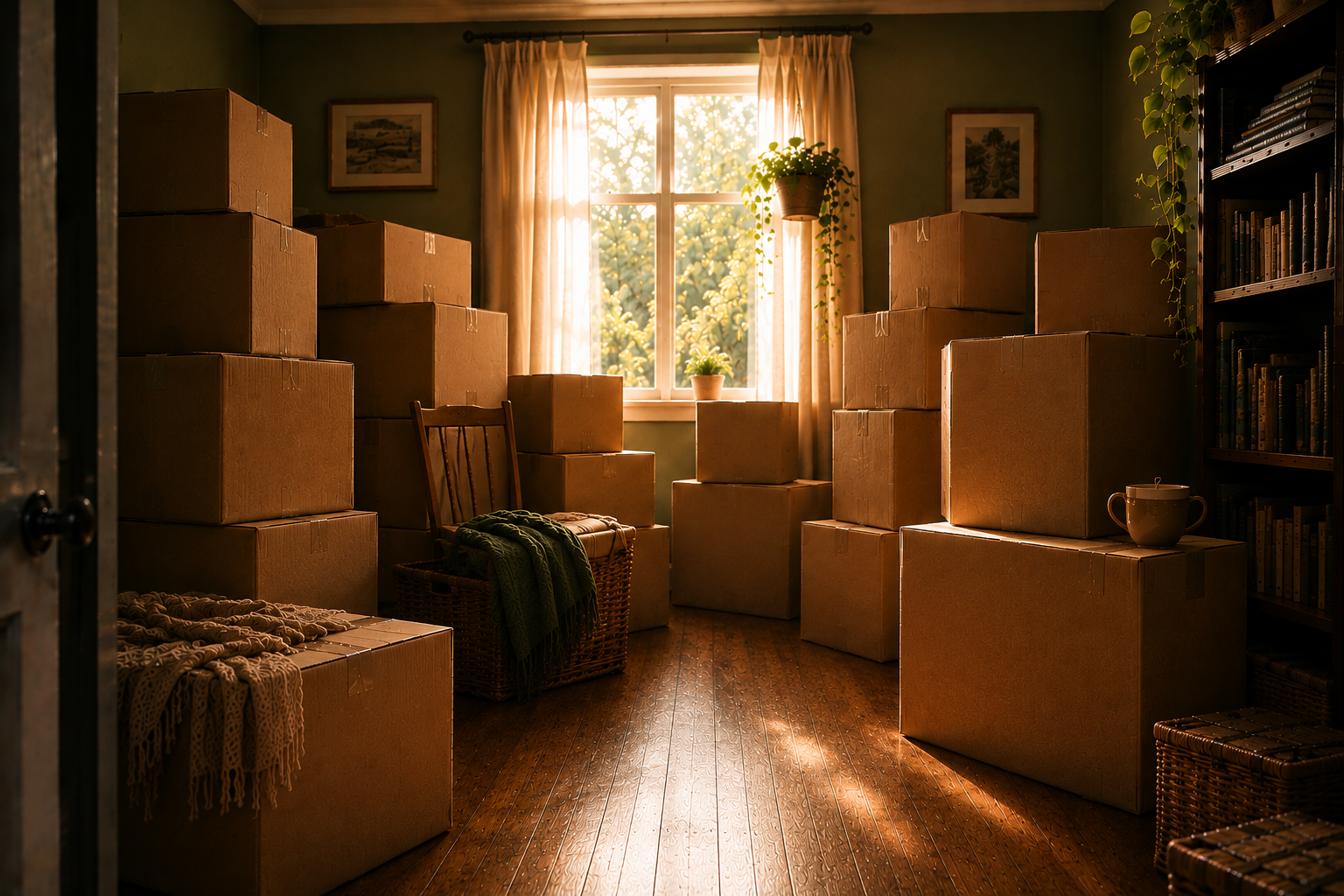
Then another box appears. And another. Some are small and easy to step around, while others are bigger. A few have been sitting there for so long you've almost stopped seeing them.
And then there are the wobbly ones. You know exactly where those are. You know not to brush against them, which way to walk around them and how much distance to leave. You may not even consciously think about it anymore—you've simply become very good at navigating the room.
But navigating takes energy. Something that should have been a straight walk across the room now involves stepping around one box, squeezing between another two, changing direction to avoid the unstable stack in the corner and making sure you don't bump the one you really don't want to open.
Life hasn't stopped happening while all of this is going on, either. More things come into the room, the pathways become narrower and there are fewer places to stand comfortably. Things that once felt simple begin requiring more thought and effort.
Eventually, you might find yourself wondering why you're so tired, why something relatively small can feel overwhelming, or why you react so strongly to certain situations. You may wonder why you don't seem to have the capacity you once had. You may not realise just how much energy you're spending simply navigating the room.
The boxes we carry
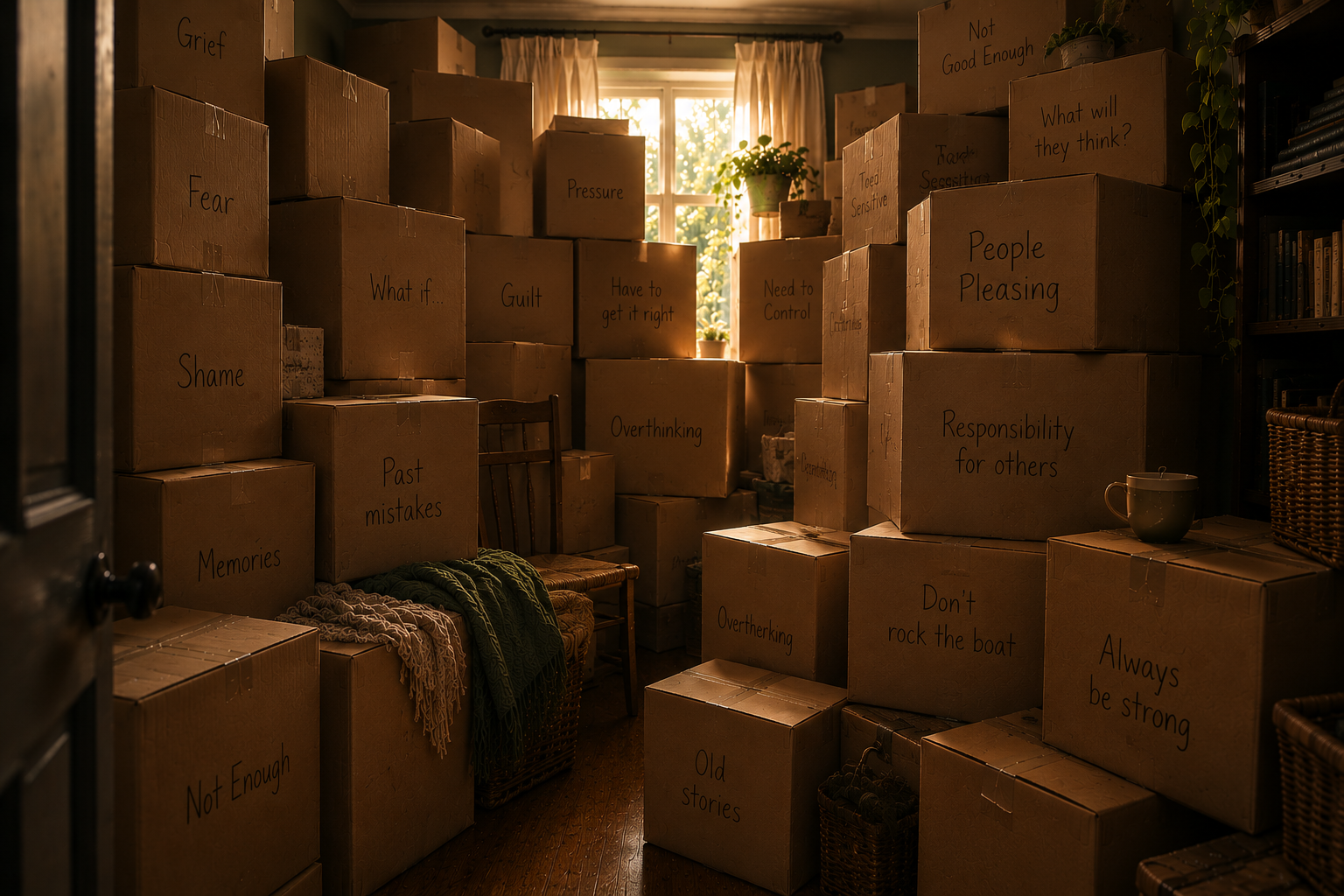
This is often how I imagine our inner world. The boxes are the emotions and experiences we haven't yet had the opportunity, capacity or understanding to fully process. Some might contain grief, fear, anger, hurt, disappointment, guilt or shame.
But I don't think they're always filled with what we'd call "negative" emotions. There can be joy we didn't feel safe enough to fully receive, pride we learned to minimise, excitement we tempered because we didn't want to be disappointed, or love that came with vulnerability we weren't ready for.
And sometimes the box isn't particularly dramatic at all. It might come from something that happened repeatedly, something somebody said, or an experience that didn't seem significant at the time but that our body quietly stored information about.
That's important, because I don't see these boxes as rubbish that needs to be cleared out as quickly as possible. There's often something inside worth understanding. An emotion can carry information about what mattered, what hurt, what we needed, what felt unsafe or what our body was trying to protect us from.
So processing an emotion, to me, is more like gently unpacking the box. We get curious about what's there and allow the emotion to be acknowledged and processed rather than continually carrying it around unopened. Once that's happened, the box doesn't need to take up the same amount of room anymore.
But the boxes aren't the whole story
While we're having all these experiences, our subconscious is also trying to make sense of them. It's learning what things mean, what's safe, what's expected of us and who we need to be in different situations. From those experiences, beliefs can begin to form.
Maybe it's I need to keep everyone happy. Or I shouldn't ask for too much. Perhaps it's nothing comes for free, it's safer not to speak up, I have to get it right, or I'm responsible for how other people feel.
And this is where I think of the walls of the room. The boxes take up space within our world, while our beliefs can quietly determine how much space we believe we're allowed to have in the first place. The walls begin moving inward.
Not necessarily because anyone deliberately put a limitation around us. Often these beliefs are formed from ordinary experiences, relationships, family language and the conclusions we made when we were much younger. We learn where the invisible boundaries are, and eventually we can stop testing them and simply live inside them.
That's one of the things I find so fascinating about subconscious beliefs. We don't necessarily experience them as beliefs—we experience them as reality. That's just who I am. That's just how life works. I could never do that. People like me don't...
We don't see the wall. We simply know not to walk any further.
And then there are the pathways between the boxes
Over time, we become incredibly skilled at living in our particular room. We learn which boxes to avoid, how to keep the stack from wobbling and how to get from one side to the other without disturbing anything.
We learn when to stay quiet, when to please, when to overthink, when to anticipate someone else's reaction, when to pull back and when to push through. These are often the very patterns we later judge ourselves for and find ourselves asking, "Why do I keep doing that?"
But when you can see the whole room, the pattern can make much more sense. Perhaps that particular route through the room was once the safest one available. The problem isn't that you learned how to navigate it; it's that you may still be taking the same complicated route long after another path has become possible.
What happens when there's more room?
This is where the work becomes really interesting for me, because we don't have to empty the entire room in one go. We don't need to tear down every wall. We can start with what's there now.
One emotion gets processed and one box is unpacked. A belief that once felt unquestionably true is looked at from where you are today and allowed to evolve. Perhaps one of those invisible walls shifts back a little.
And there's space. At first, you may barely notice it. Then one day something happens that would normally have triggered you—and you respond differently.
You have a difficult conversation without spending the next three days replaying it. Someone is disappointed with you and you realise you don't have to immediately make it better. An opportunity appears and instead of automatically thinking that's not for someone like me, you become curious.
Or perhaps you simply get to the end of the day and realise you still have some energy left. Life hasn't stopped happening. There are still boxes in the room, and there will probably always be things to unpack as we continue experiencing life.
But you're no longer using quite so much energy navigating around everything that's already there. There's more room to breathe, more room to respond instead of react, and more room to experience joy when it's here. There's more room to explore what's possible without automatically bumping into an invisible boundary.
There's more capacity for life itself.
And perhaps that's one of the most profound things I've experienced through doing this work myself. I haven't become somebody else. If anything, I feel more like myself.
It's just that there's more room for me to be here.
Maybe we don't realise how small our world has become until we begin to have more room to be ourselves.